CAT 1 Paper 2
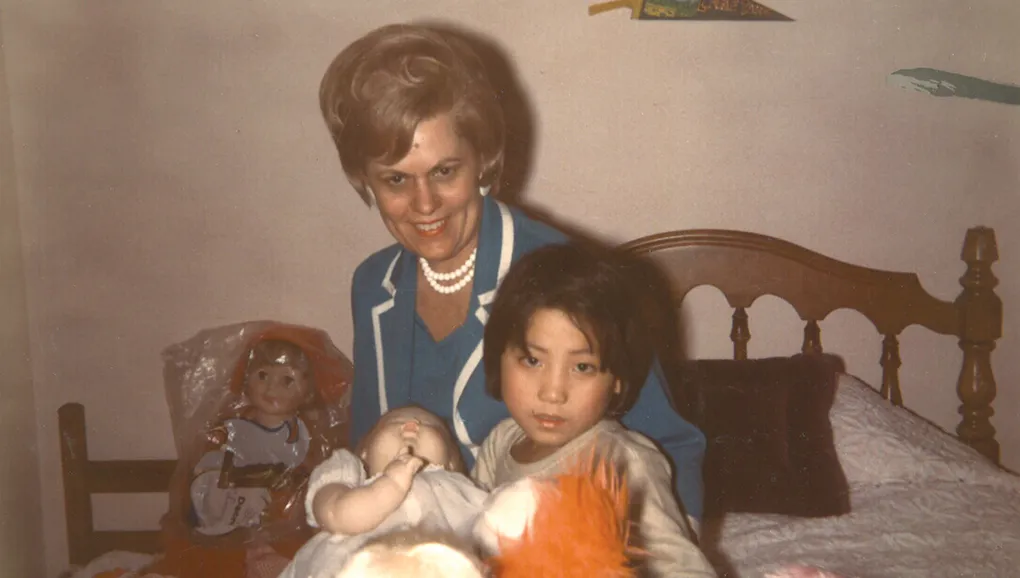
In the film First Person Plural, Deann Borshay tells her story of being a transracial adoptee, as she recounts the struggles and confusions she faced having both a Korean and American set of parents. Stuart Hall’s “Encoding/Decoding” article dives into the importance of how messaging in the media is produced by the sender and received by the audience, discussing ideas of dominant, oppositional, and negotiated positions. His term of “negotiated position” defines the view in which the receiver acknowledges and understands the dominant position or primary argument, yet still forms their own opinions to the topic at hand due to their own personal contexts and experiences. Borshay’s story challenges the dominant ideology and illustrates the negative impacts and strains Borshay felt towards her racial and cultural identity due to being an adopted child. The uneasy relationship between Deann Borshay and her adoptive parents in First Person Plural is emphasized through cinematic film techniques of hand held shots and close up angles in order to shine light on the anxieties and struggles Borshay faced as a transracial adoptee.
When one thinks of adoption, the immediate thought goes to a loving and warm home, with picture-perfect adoptive parents and their appreciative child. The dominant position comes from the parental perspective, in that all the sacrifices and difficulties made in pursuit of saving the child are the ultimate proof of unconditional, colorblind love. Borshay starts her adoption story by showing a series of old home videos of her siblings and parents prior to her joining the family. The flashback enables Borshay to bridge the time gap between the present and the adoption moment and establishes a clean starting point for her to begin her complete story. All home videos Borshay chooses to include capture joyous and happy moments – her mother on a family vacation, her brother learning to ride a bike, and her sister with Christmas gifts – which illustrate the stereotypical, expected excitement and undeniable love carried by adoptive families. By opening with the emotions and recountings from her siblings and parents first, even before retelling her own side of the story, she acknowledges and appeals to the dominant perspective because she places the sentiments and feelings of the adoptive family at the forefront, similar to mainstream media. Her purpose is to establish a common ground with the audience, as she exhibits her self awareness of the dominant opinions and expands her ethos as a filmmaker.
In order to counteract the dominant position, Borshay employs the cinematic film techniques of a hand-held camera and long, close-up shots to convey her oppositional position that trans-racial adoption can also bring a sense of isolation and confusion with personal identity. During the film sequence in which Borshay’s adoptive parents approach and finally meet her Korean birth family, the camera is held at a medium angle, medium shot distance, and has a mobile, hand-held movement. The purposefully shaky and jerky camera gives the effect that the audience is physically present in the moment with her and her family, as well as mirror the nervousness and anxiety Borshay feels for both sets of her parents to meet. The suspenseful atmosphere facilitates the audience to understand the significance of the moment and recognize that Borshay needed her parents to fly to Korea to help heal her traumatic feelings of being isolated, misunderstood, and not fully belonging to either of her families. Furthermore, when Borshay and her birth mother hug, a close-up camera distance and eye-level angle allows the viewers to see the details on their faces, riddled with relief, longing, and happiness. This establishes a personal connection between the audience and Borshay because she is sharing a private and intimate moment. The audience is placed into a position to feel all of Borshay’s complex emotions, pushing them to sympathize with her. Because people are more likely to remember and side with those who they can relate to, the audience is more inclined to support her message about struggles of finding a cultural and racial identity as a transracial adoptee.
The balance between the dominant and oppositional perspectives express Borshay’s complex attitudes towards transracial adoption, with a clear sense of appreciation for her adoptive parents functioning to the best of their ability, yet also a false imagined reality that she could have been relieved of great pain and suffering if the adoption never happened. Circumstances and self-interests may lead to a negotiated decoding that encompasses a resistance to her argument about focusing so strongly on the child and overlooking the families’ traumas too, yet an agreement to her feelings of ostracization and loneliness. Others may concur with her bringing light to the adoptee’s storyline, but modify the claim to prioritize the positive impacts and effects of adoption as a whole. Regardless of perspective, the audience is invited to take on a distinct negotiated position and weigh the significance of both ends of the spectrum via their own personal experiences and biases, now armed with Borshay’s lens of skepticism and questioning of the traditional adoption storyline.